Porous asphalt driveways in London
Porous asphalt looks like a tarmac driveway, but rainwater drains straight through it into a stone base below. Because the water soaks away on your own land, a front driveway of any size needs no planning permission.
- £10m public liability insurance
- Our own hand-lay and machine-lay crews
- CSCS-carded team
- 40 years in the trade
How a porous asphalt driveway works
Ordinary asphalt is packed with fine material, so water runs off the top. Porous asphalt leaves the fines out. That leaves around a fifth of the surface as tiny connected gaps, so rain drops straight through.
Underneath, a deep layer of clean stone holds the water and lets it soak into the ground at its own pace.
Typical depths for a car driveway. The sub-base depth depends on the ground and is set at the survey. Not to scale.
Porous asphalt and planning permission
Since 1 October 2008, paving more than 5 square metres of a house's front garden with an impermeable surface needs planning permission, unless the water is drained to a permeable area on your land. Government guidance is clear that a driveway of any size laid in a porous surface such as porous asphalt does not need permission.
Some London councils publish their own permeable paving guidance, Richmond among them, and we follow it where it applies. Flats, maisonettes and listed buildings have different rules, and a new dropped kerb always needs council approval.
Porous asphalt or standard tarmac with drainage?
Both keep you inside the planning rules. Which suits your driveway comes down to where the water can go.
| Porous asphalt | Standard tarmac with drainage | |
|---|---|---|
| Where the water goes | Straight through the surface into the stone base, then into the ground | Runs off the surface to a lawn, border, channel drain or soakaway |
| Planning permission | Not needed, whatever the size | Not needed, as long as the water drains on your own land |
| Best for | Front gardens with nowhere left to drain water to | Driveways next to a lawn or border, or with room for a soakaway |
| Sub-base | Deeper, open-graded stone that stores water | MOT Type 1, which is dense and sheds water |
| Looks | Slightly more open, textured finish | Smooth, close-textured finish |
| Upkeep | Keep soil and silt off it so it doesn't clog | Keep drains and gullies clear |
Is porous asphalt right for your driveway?
A good fit
Small front gardens with no lawn or border left, driveways that puddle now, and anyone who wants a large driveway with no planning application.
Needs a closer look
Steep driveways, where water can run off before it soaks in, and heavy London clay, where we make the base deeper or add an overflow.
Not the right choice
Areas where soil, sand or gravel will keep washing on, and yards with heavy lorries turning on the spot.
Looking after a porous driveway
Porous asphalt needs a little more care than standard tarmac, because its pores have to stay open.
- Sweep it regularly, and keep soil, sand, gravel and grass cuttings off the surface
- If it starts to drain slowly, a vacuum sweeper or jet wash clears the pores
- Soak up oil or fuel spills with an absorbent spill kit, not sand or cat litter, which block the pores
- Never coat it with a standard driveway sealer, which closes the surface
Porous asphalt driveway costs
We price every porous driveway from a site visit, because the ground decides how deep the base needs to be. What moves the price:
- The size of the area
- How deep the sub-base needs to be for your ground
- Whether an overflow to a soakaway or drain is needed
- Dig-out depth and how much spoil goes away
- Edging and access
From first call to fresh surface
Tell us about the job
Takes a minute online, or call us. Photos help if you have them.
We visit and measure
We check levels, drainage and what is underneath before we price anything.
You get a written quote
Itemised, showing the area, the build-up and what is included.
We lay it
Dig-out, sub-base, binder and surface course, rolled and edged. Then we clear the site.
Porous asphalt we've laid
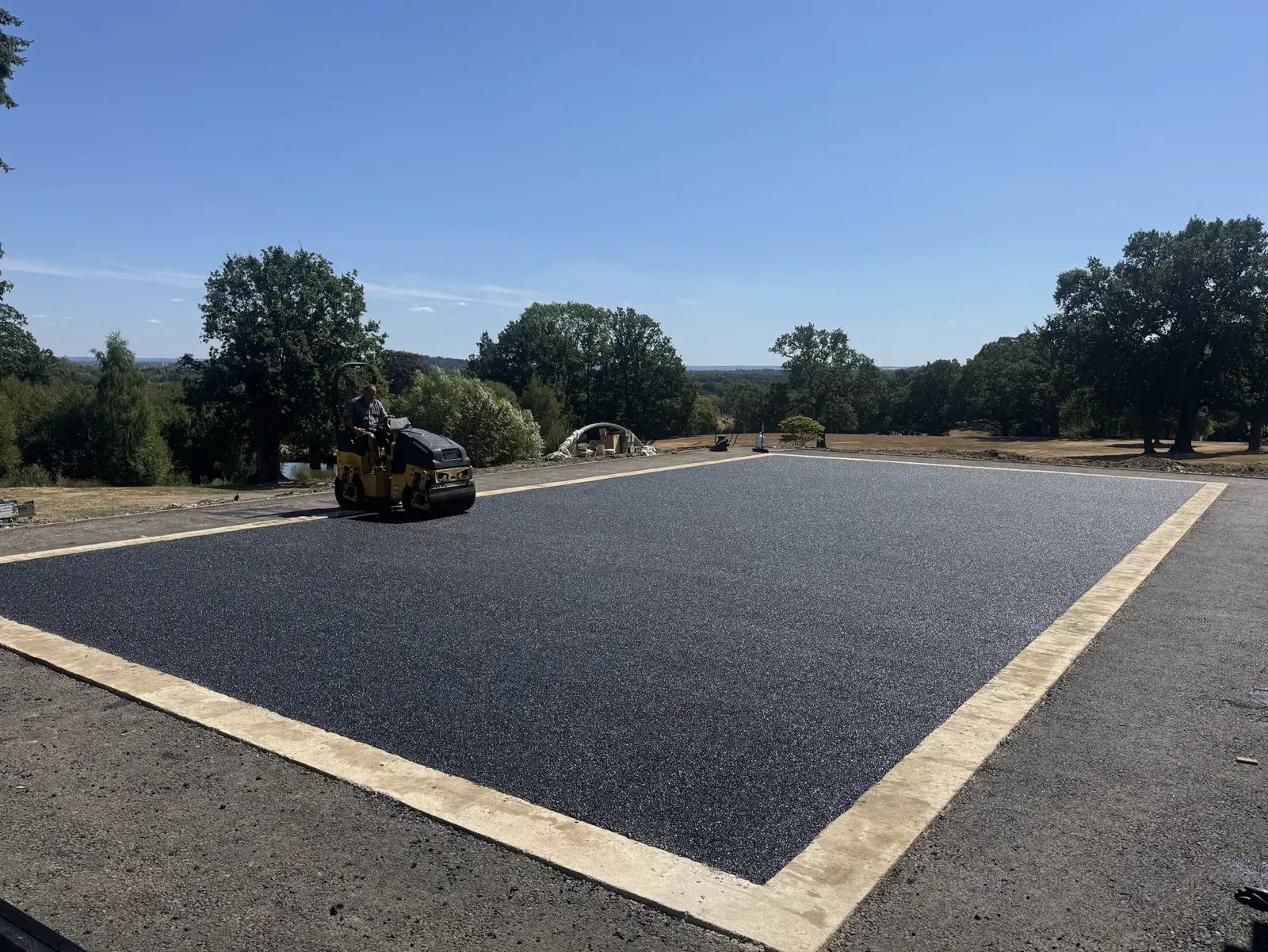
Porous asphalt bases for padel courts in Esher, laid ready for the playing surface. The open-graded build-up is the same one we use under porous driveways.
See all projects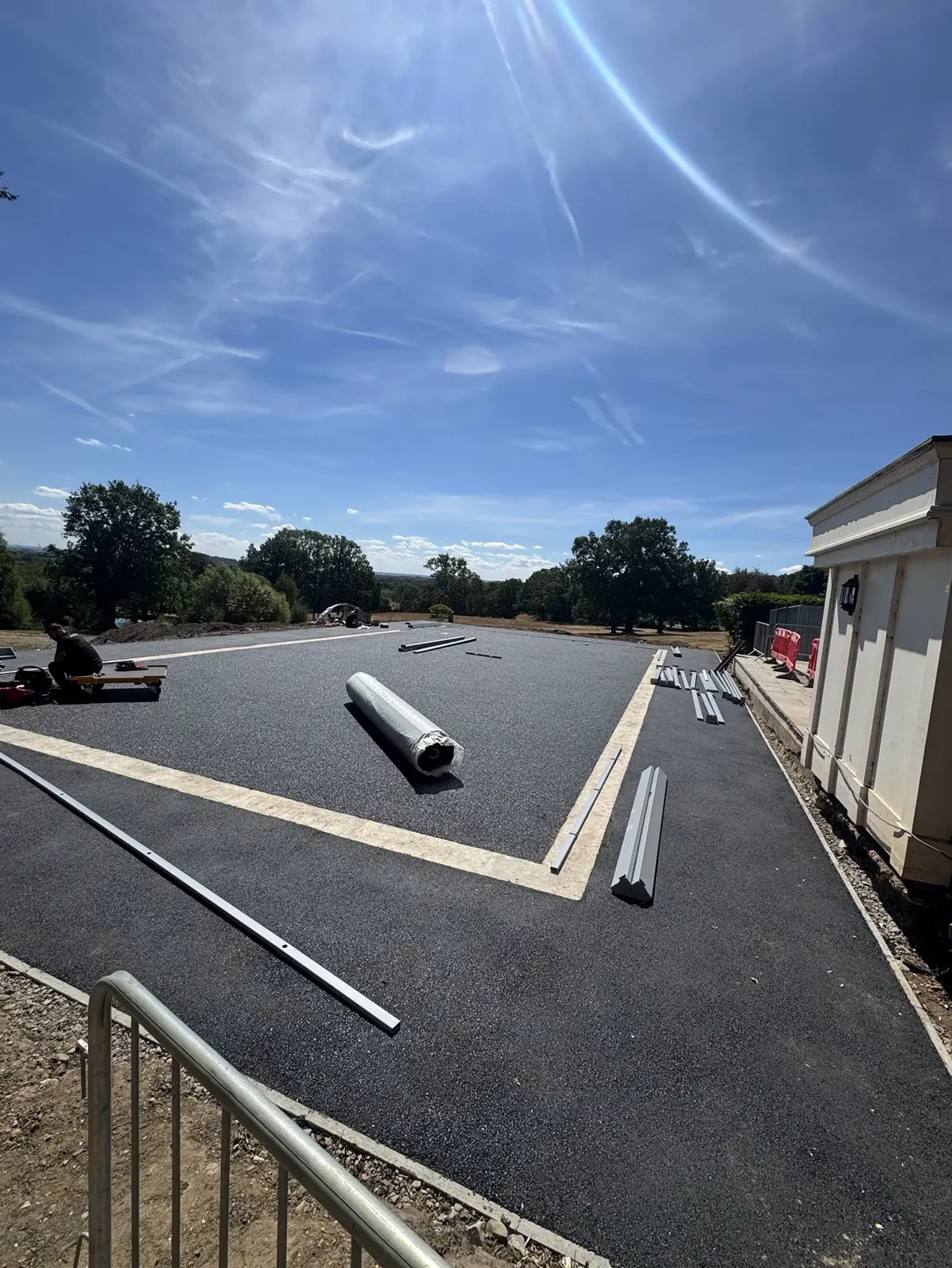
Porous asphalt driveway questions
Do porous asphalt driveways need planning permission?
No. Government guidance says a new or replacement front driveway of any size does not need planning permission if it uses a permeable or porous surface such as porous asphalt.
Does porous asphalt work on London clay?
Yes, with the right base. Clay soaks water up slowly, so we make the stone sub-base deeper to hold rainwater while it drains away, and add an overflow to a soakaway or drain where the ground needs it. We check the ground at the survey.
Can you make my existing tarmac driveway porous?
Not by resurfacing it. The old base is dense MOT Type 1, which stops water draining. A porous driveway needs the old surface and base dug out and an open-graded base put in.
How long does a porous asphalt driveway last?
Laid on a proper base and kept free of silt, typically 15 years or more, much like a standard tarmac driveway.
Does porous asphalt look different from normal tarmac?
A little. The surface is more open and textured, because it has no fine material filling the gaps. From the street it reads as a dark asphalt driveway.
Is porous asphalt more expensive?
Usually somewhat more than standard tarmac, mostly because the sub-base is deeper. On a front garden with nowhere to drain to, it is often cheaper than adding a soakaway.
Porous driveways across London
We lay porous asphalt driveways in every London borough.
All areasGet a price for a porous driveway
Tell us roughly how big it is and where. We will check the ground and send you a written quote.