Tarmac driveways in London
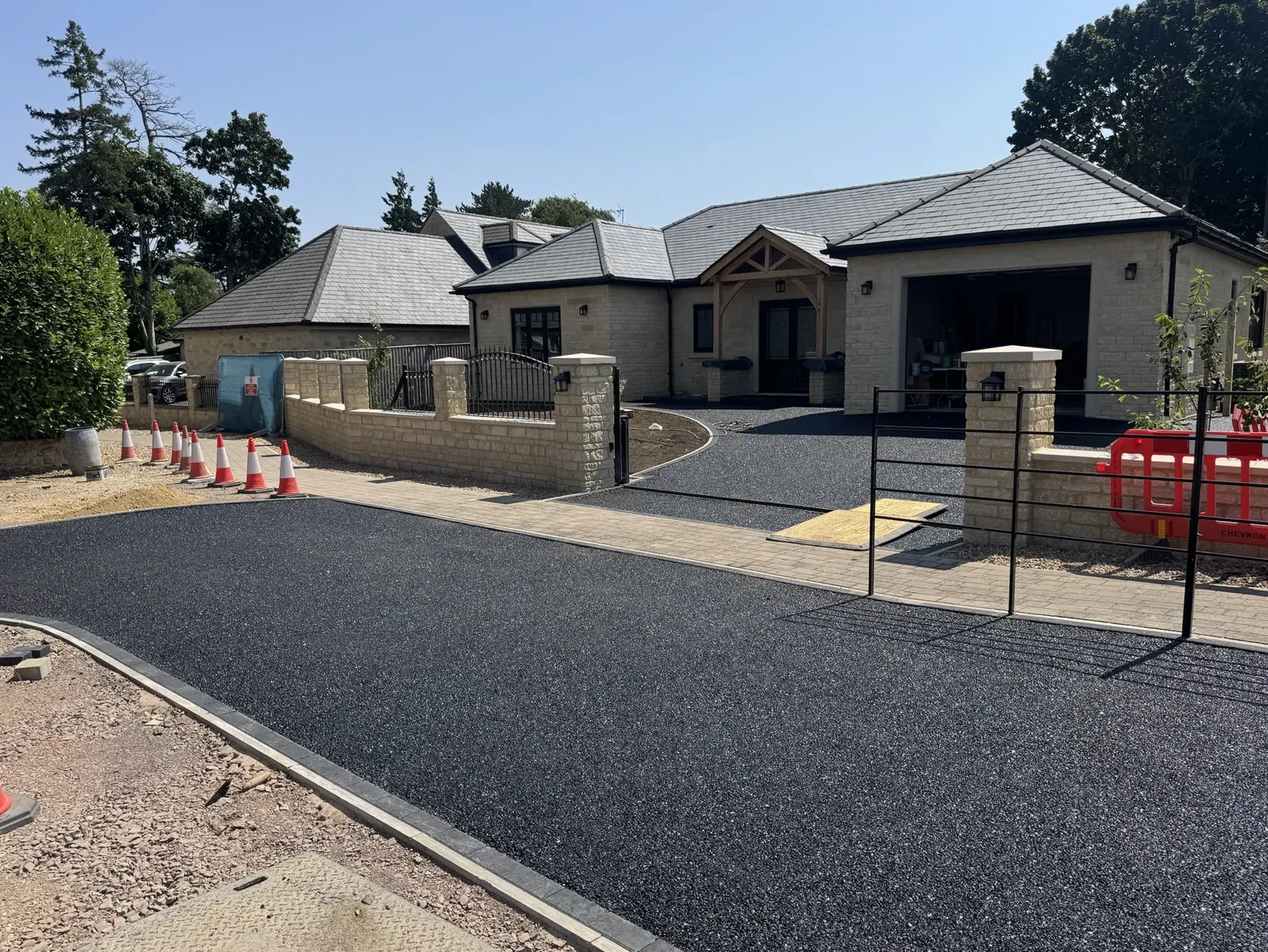
New tarmac driveways and full replacements, laid by our own crew. We dig out, build a proper sub-base, sort the edging and drainage, then lay and roll two layers of hot asphalt that will take daily parking for years.
- £10m public liability insurance
- Our own hand-lay and machine-lay crews
- CSCS-carded team
- 40 years in the trade
What's included in a new tarmac driveway
Every driveway we quote includes the full build, not just the black top. The parts you can't see are the ones that decide how long it lasts.
Dig-out and muck away
We take out the old surface and soil to the depth the build-up needs and remove it from site.
A compacted sub-base
MOT Type 1 stone, laid in layers and compacted with a roller or plate. This is what stops a driveway sinking or rutting.
Edging
Kerbs, setts or timber along every open edge, so the asphalt has something to bear against.
Drainage
Falls set away from the house, plus a channel drain or soakaway where the levels need one.
Binder and surface course
Two layers of hot asphalt, each rolled while hot to the right density.
A clean finish
Joints sealed, edges tidied and the site swept before we leave.
How we build a tarmac driveway
A typical domestic driveway is four layers deep. We confirm the depths at the survey and go deeper where vans or heavier vehicles park, or the ground is soft.
Typical depths for a car driveway. Not to scale.
Do you need planning permission for a tarmac driveway?
Not if it is planned properly. Since 1 October 2008, a new or replacement hard surface over 5 square metres in the front garden of a house needs planning permission if rainwater runs off it rather than soaking away on your own land.
Standard tarmac is impermeable, so we lay it to fall towards a lawn, border, channel drain or soakaway. The other route is porous asphalt, which lets water straight through. Either way, no application is needed. Flats, maisonettes and listed buildings have different rules, so check with your council first.
Edging options for tarmac driveways
Edging holds the asphalt in place and sets the look. We fit all of these, and can lay red or buff coloured asphalt on request.
Concrete kerbs
The standard choice. Strong, straight and good value.
Granite setts
A darker, traditional border that suits period houses.
Block paving border
Ties the driveway in with paths or a patio.
Timber edging
For curved edges and softer, garden-side borders.
Need a dropped kerb as well?
If you want to park on a front garden that has no vehicle access yet, you need a dropped kerb, which councils call a vehicle crossover. Your council has to approve it, and most London boroughs use their own approved contractor for the work on the pavement.
We lay the driveway to meet the new crossover, and can help with the levels and drainage details the application asks for.
How to get a dropped kerb in LondonHow much does a tarmac driveway cost in London?
Every driveway is priced from a site visit, because what is underneath changes the job. These are the things that move the price:
- The size of the area
- How deep we need to dig, and how much spoil goes away
- Access for the lorry and machines
- Drainage: channel drains or a soakaway
- The edging you choose
- Steps, slopes or ironwork to work around
From first call to fresh surface
Tell us about the job
Takes a minute online, or call us. Photos help if you have them.
We visit and measure
We check levels, drainage and what is underneath before we price anything.
You get a written quote
Itemised, showing the area, the build-up and what is included.
We lay it
Dig-out, sub-base, binder and surface course, rolled and edged. Then we clear the site.
Tarmac driveway questions
How long does a tarmac driveway last?
Typically 15 to 20 years or more. How long yours lasts depends mostly on what is underneath: a deep, well-compacted sub-base and good drainage matter more than the top layer.
Can you lay tarmac over my existing driveway?
Sometimes. If the existing surface is sound, level and well drained, a new surface course can go over it. If it has sunk, cracked right through or holds water, it needs digging out. We will tell you which at the site visit.
How soon can I drive on a new tarmac driveway?
You can usually walk on it the same day. Leave it 24 to 48 hours before driving on it, and longer in hot weather. For the first few weeks, avoid turning the wheels while the car is stationary.
Will weeds grow through tarmac?
Not through a properly laid driveway. Weeds come up where the sub-base is thin or there is no edging. We dig out to the right depth, compact the stone and fit a membrane where needed.
Is tarmac cheaper than block paving or resin?
Usually, for the same area. It is also quicker to lay. Block paving and resin give a more decorative finish. Our guide compares all three.
How long does it take to lay a tarmac driveway?
Most driveways take a few days from dig-out to final roll. Larger or more complex jobs take longer, and we give you dates before we start.
Tarmac driveways across London
We lay driveways in every London borough. Each of these has its own page with local jobs and the council's dropped-kerb rules.
All areasGet a price for your tarmac driveway
Tell us roughly how big it is and where. We will arrange a visit and send you a written quote.